
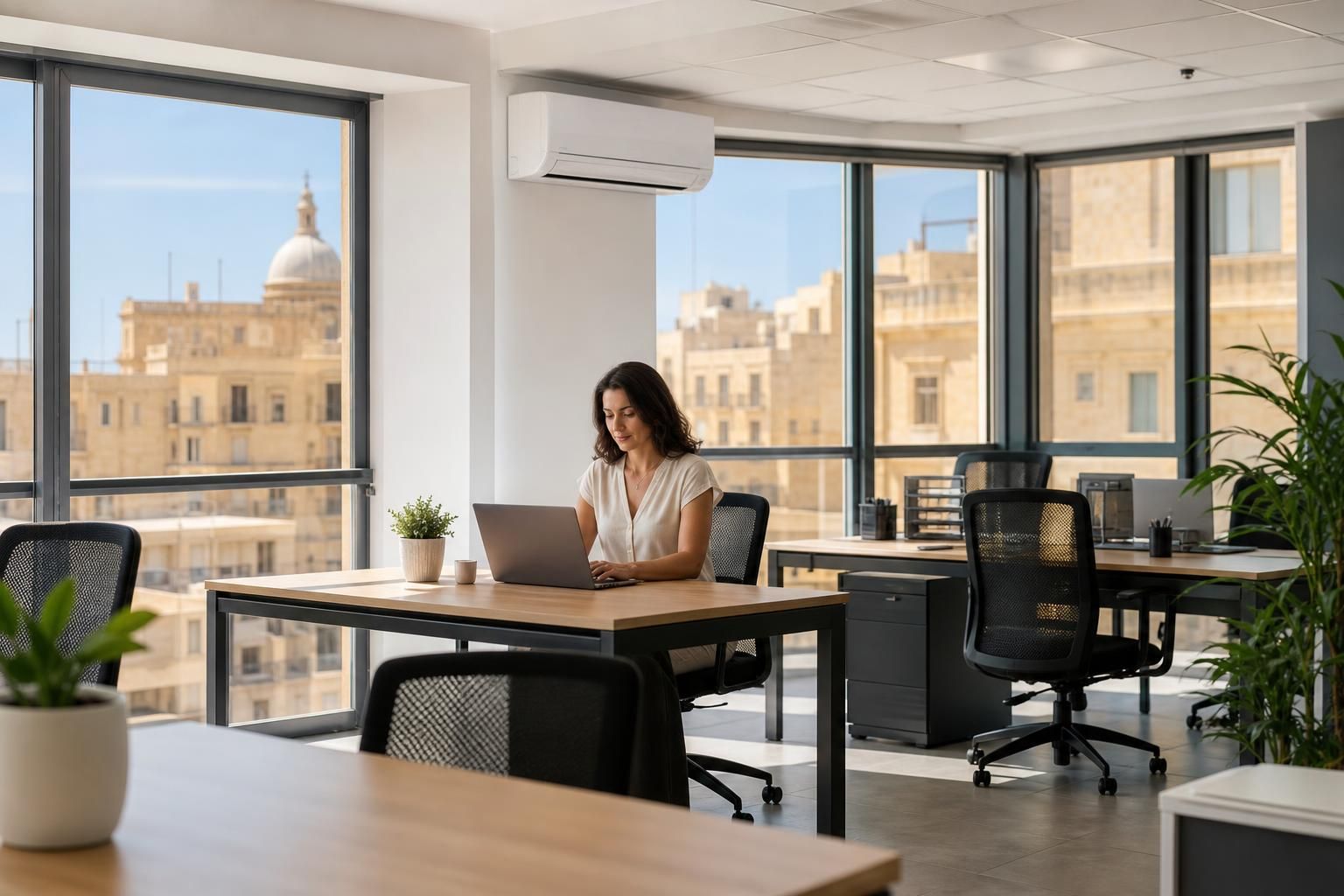
Most businesses compare Maltese offices by the monthly rent and stop there. That habit leads to unpleasant surprises around July, when the cooling bill arrives and the real cost of the space becomes clear. Understanding how an office behaves across the seasons helps you budget properly and choose premises that do not quietly drain your margins.
If you are still at the shortlisting stage, it helps to browse a range of office space to rent in Malta and note which buildings have modern glazing, shading and efficient cooling, because those details shape your running costs far more than most people expect.
Why Malta Is Different From Northern Europe
Malta sits in a hot Mediterranean climate with long, bright summers and short, mild winters. Heating is a minor line item for most offices. Cooling is the opposite: it can become the single largest utility cost between June and September. Many older limestone buildings hold heat well, which is lovely in winter and expensive in August.
Orientation matters too. A south or west facing floor with large windows can gain heat all afternoon, forcing air conditioning to run flat out. A shaded or north facing floor may need far less energy for the same comfort level.
The Main Running Cost Categories
Electricity and cooling
Electricity covers lighting, computers, kitchen appliances and, above all, air conditioning. The efficiency of the cooling units is critical. Modern inverter systems use noticeably less power than older fixed speed units, so ask the landlord how old the equipment is and when it was last serviced.
It also pays to ask whether the office has its own meter or shares one with other tenants. A dedicated meter gives you control and transparency. A shared arrangement can be fair, but only if the allocation method is written into the agreement.
Water and waste
Water bills for an office are usually modest, but they can climb if you have a kitchenette, a shower or staff who use the premises heavily. Waste collection and commercial refuse arrangements vary by locality, so confirm what is included before you sign.
Internet and telecoms
Connectivity is rarely an afterthought for a modern team. Check which providers serve the building, whether fibre is already installed and whether there is a installation fee. A building without fibre can add weeks and cost to your move in.
Service charges and maintenance
Some buildings charge a service fee for cleaning of common areas, lift maintenance, security and insurance of shared parts. Others fold these costs into the rent. Neither approach is better by default, but you need to know which one you are getting so you can compare offers fairly.
How Costs Shift Through the Year
A sensible budget treats the year in three phases rather than twelve identical months.
- Summer (June to September): peak cooling demand, highest electricity use and the months when poor insulation hurts most.
- Shoulder seasons (April, May, October, November): comfortable temperatures, lower bills and the best time to review your consumption.
- Winter (December to March): light heating needs, occasional humidity issues and generally the lowest utility spend.
Ask the current or previous tenant, or the landlord, for typical monthly electricity figures across the year. Even a rough range is far more useful than guessing.
Practical Ways to Keep Bills Under Control
You cannot change the weather, but you can change how your office responds to it. Small decisions add up over a twelve month lease.
- Choose a floor with good shading, external shutters or reflective glazing.
- Set cooling to a sensible, steady temperature instead of switching it on and off repeatedly.
- Use LED lighting and motion sensors in meeting rooms and storage areas.
- Service air conditioning units before summer so they run efficiently.
- Agree who pays for repairs to cooling equipment before you move in.
Questions to Ask Before You Sign
A short list of questions can save you a long argument later. Who owns and maintains the air conditioning? Is electricity metered separately? Are service charges fixed or variable? How have bills looked in the hottest month? Written answers are best, and anything important should be reflected in the lease itself.
Teams that want a clearer picture of total cost can compare options through a specialist listing source such as serviced and unfurnished offices in Malta, where the differences between rent only offers and all inclusive arrangements are easier to weigh side by side.
Budgeting Beyond the Headline Rent
A useful rule of thumb is to add a realistic utility and service allowance on top of the quoted rent, then compare offices on that combined figure. An apparently cheaper office with poor insulation and old cooling can end up costing more per year than a slightly pricier one that is efficient and well maintained.
Do not forget one off costs either: deposits, agency fees where relevant, fit out, signage and any internet installation. Treat these as part of your first year budget so the move does not strain your cash flow.
The Bottom Line
The true cost of an office in Malta is rent plus the climate. Buildings that handle summer heat well, offer transparent metering and have clear service charges give you predictable budgets and more comfortable teams. Ask the right questions early, request real consumption figures and compare offices on total annual cost rather than the monthly rent alone. That discipline is the difference between a space that supports your business and one that quietly erodes it.