
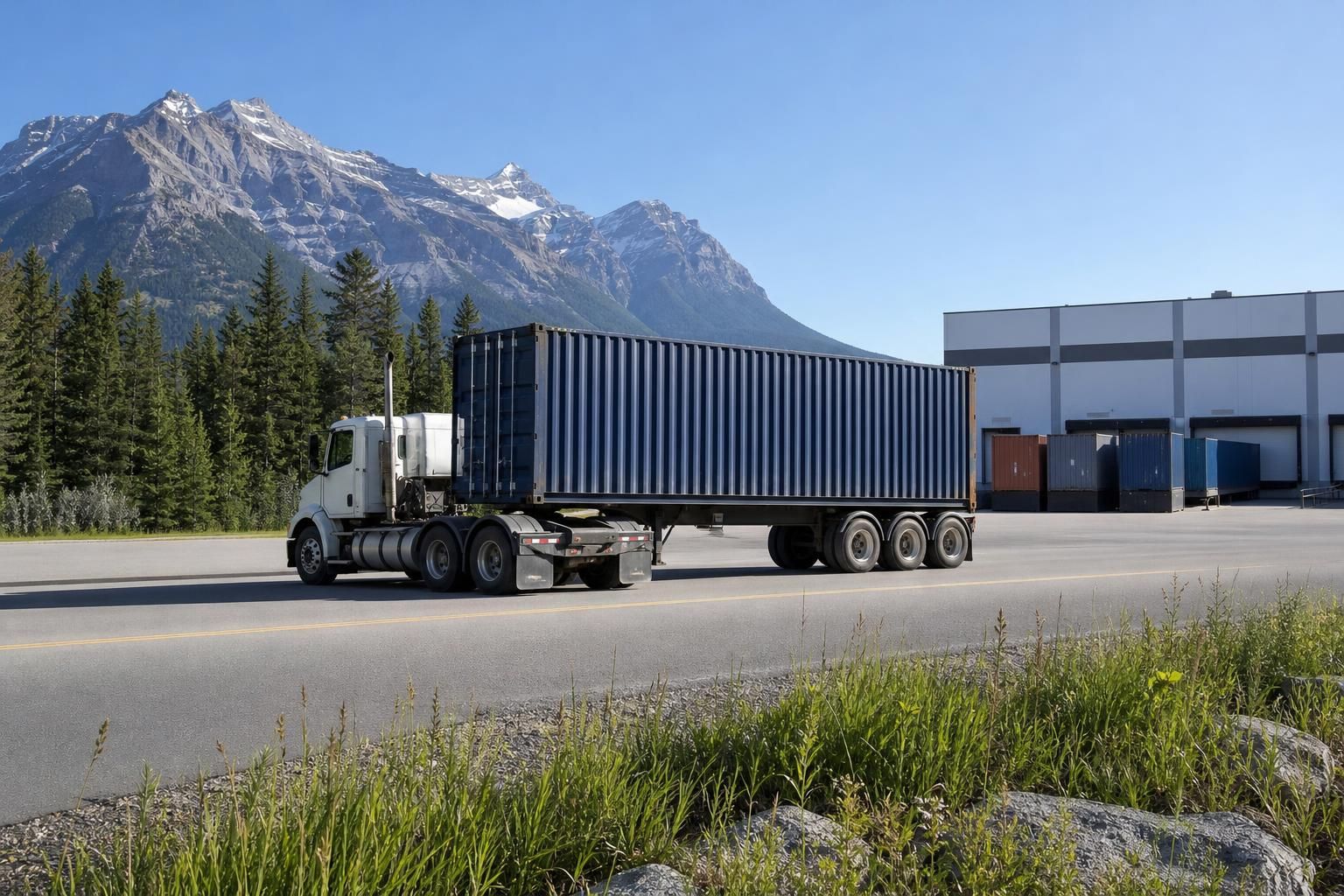
Importers often learn what a logistics company is worth on the first bad week. A container is held, a driver does not show, and nobody can say when the freight will reach the warehouse. Choosing the right partner before that week arrives is far cheaper than fixing the damage after it.
What a Logistics Company in Canada Should Actually Deliver
The word logistics covers a wide range, from freight brokers who book space to asset-based carriers who own the trucks. For an importer, the useful definition is narrower: a partner that moves your goods from the port or rail ramp to your door, keeps you informed along the way and absorbs problems before they become your problems.
The Port-to-Door Handoff
Most import delays are created at handoffs: vessel to terminal, terminal to truck, truck to warehouse. A reliable partner manages each one with a plan. Ask how pickups are scheduled, how the company handles customs holds and gate appointments, and what happens when a container is not ready on the expected day. Vague answers here predict vague performance later.
Equipment and Capacity
Capacity is not an abstract number. It decides whether your pickup happens on the first available day or the third. Ask whether the company runs its own tractors, how many chassis it controls, and whether it has dry vans and flatbeds for the domestic leg after the container is unloaded. A provider that owns a meaningful share of its equipment has more control over timing than one that sources everything on the spot market.
Storage Is Part of the Plan
Importers rarely receive cargo on a perfectly smooth schedule. Warehouses fill up, production shifts, and customers change dates. A logistics partner with a secured yard can hold a container safely until you are ready, which avoids terminal storage charges and protects the cargo. If you have ever searched for container storage near Brampton in a hurry, you know how valuable it is to have that option built into the relationship rather than negotiated at the last minute.
Questions That Expose a Weak Partner
- Who is my single point of contact, and how quickly do they respond?
- How do you notify me of delays, and how early?
- Which parts of my move do you perform yourself and which do you hand to partners?
- What triggers extra charges, and how are they documented?
- How close is your terminal to the rail ramps and ports I use?
- Can you give me references from importers moving similar volumes?
The strongest providers answer these without hesitation. The weakest turn each one into a sales pitch.
Understanding How Partners Fit In
Even the largest carriers work with transportation partners during busy periods or on lanes outside their normal network. This is a normal and healthy practice. The point is accountability: whoever you hire should remain responsible for your freight regardless of whose truck is on the road. Ask how that accountability works in practice and whether the contract reflects it.
Reading the Quote Properly
A low rate with unclear accessorials is a trap. Look for the base haul rate, fuel surcharge, chassis charges, waiting time rules and any storage terms. Compare quotes on total expected cost for a realistic move, not on the headline number. Importers who do this consistently find that the cheapest quote and the cheapest outcome are rarely the same.
Experience Is Not a Marketing Word
A company that has handled freight through winter storms, border backups and peak seasons for decades has solved problems that newer operators have yet to meet. When you evaluate a logistics company in Canada, look at how long it has operated, what it runs every day and whether it holds relevant industry memberships. S&R Trucking, for example, has operated since 1992 from Kleinburg, Ontario, and belongs to the Uniform Intermodal Interchange Agreement community, which sets the standards for equipment interchange in intermodal freight.
Start Small, Then Scale
Before moving all your volume, test the relationship with a few containers. Measure on-time pickups, communication, paperwork accuracy and invoice clarity. A short trial gives you real data and lets you correct course before the stakes rise.
Final Thoughts
A good logistics partner makes your supply chain quieter. Containers move when they should, storage is available when plans change, and problems are reported early. Ask the right questions, read the quote closely and test before you commit. The right partner pays for itself the first time something goes wrong and you barely notice.